
The Adaptation of Female Roles in Horror Comics
The Adaptation of Female Roles in Horror Comics

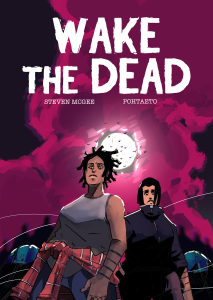
Blerdminds productions Wake the Dead (2024)
From Victims to Villains to Voices: The Evolution of Women in Horror Comics
Be it a surprise to you or not, women have always been at work behind the scenes, aiding the development of the horror genre, across numerous media from earlier times to now. Working as a costume designer, story writer, co-directors or directors, and more, women have continually reshaped how audiences engage with the horror genre. The adaptation of female roles in horror comics over the years is an adventure that mirrors broader cultural shifts, from the silent damsels of the 1940s to today's powerful, complex protagonists and creators. Horror comics have long explored society's anxieties and fascinations, and the representation of women within them tells a compelling story of censorship, empowerment, and rebellion.

Tales from The Crypt EC Comics' Tales from the Crypt #24 (July 1951) Cover art by Al Feldstein
Golden Age (Late 1930s – Early 1950s): Witches, Victims, and Vamps
In the earliest days of horror comics, women were often cast in one of three roles: the helpless victim, the seductive femme fatale, or the grotesque witch. These archetypes were shaped by pulp fiction and popular horror films of the time. EC Comics, Avon, and Harvey led the charge with titles like Tales from the Crypt, Witch’s Tales, and Ghost Comics. Characters like the "Old Witch" from EC Comics played horror hostesses, guiding readers through tales with dark humour and eerie flair. This prevailed, until 1954.
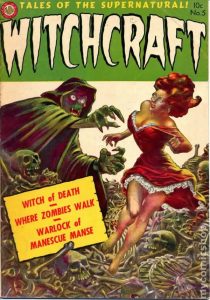
Witchcraft (1952 Avon) Comic books
The Censorship Era (1954–1960s): Silence and Sanitization
In 1954, the Comics Code Authority (CCA) banned overt horror, sexual imagery, and violence, following a series of senate hearings in April and June, which focused on particularly graphic “crime and horror” comic books of the day, and their impact on young people — juvenile delinquency. Taking these commonplaces out of horror kind of defeats a major purpose of the genre. This effectively neutered horror as a genre and led to a significant decline in horror comics.
This brought about The Censorship Era (1954-1960s). The catalyst for this was the “Seduction of the Innocent” by Dr. Fredric Wertham, which warned that comic books were a harmful form of popular literature and a serious cause of juvenile delinquency.
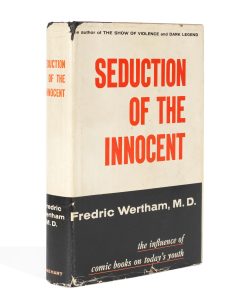
WERTHAM (Fredric) Seduction of the Innocent FIRST EDITION (1954), Bonhams Comics
The adaptation of female characters during this era was largely relegated to passive, moralistic roles like the wholesome girlfriend or the concerned mother. The tropes that once allowed them power—even in monstrous forms—were forbidden.
Bronze Age Revival (1970s): The Rise of Horror Hostesses and Anti-Heroines
Cut to the early 1970s, the CCA relaxed its grip, and horror made a triumphant return—with women in front. Warren Publishing introduced Vampirella in 1969, a character who combined sex appeal with autonomy and power. DC explored the gothic romance-horror hybrid in Dark Mansion of Forbidden Love, centering on female leads with emotional and psychic depth. Marvel brought us characters like Satana, the daughter of Satan, an interesting morally gray female anti-hero.
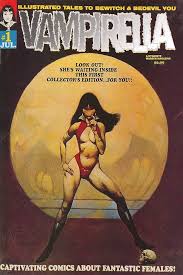
Warren Comics, Vampirella #1 (1969); Bernews

DC Dark Mansion of Forbidden Love (1971); dc.fandom.com
This was the Bronze Age Revival, and the rise of horror hostesses and anti-heroines. The power that was taken from them was returned, and the most was made from female roles in horror comics, with them not being background or helpless characters anymore, and taking the front seat in exhibiting women with power once again.
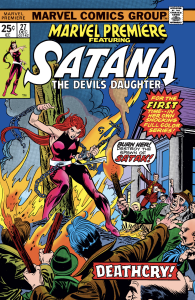
Marvel Comics, Satana the Devil’s Daughter (1973)
The 1980s–1990s: Subversion and Complexity
As independent publishers emerged from the 1980s, horror stories started exploring darker and more personal narratives. The adaptation of female roles in horror comics was no longer limited to the haunted or the hunter—they were the story. Vertigo’s Sandman (1989) introduced powerful female figures like Death and Thessaly.

London Night Studios, Razor #1 (1992)

Chaos! Comics, Lady Death (1994); amazon.com
London Night Studios went fierce with Razor(1992), a tormented vengeful anti-heroine who battles inner demons and evil in a gritty, gothic world. Chaos! Comics gave us Lady Death (1994), a fiery anti-heroine with a cult following. Although “Lady Death” first appeared in “Evil Ernie” by Eternity comics (1991), it was originally published by Chaos! Comics and remains one of the best examples of the bad girl titles that took the American comic book industry by storm during the late 1990s.
These women were often both monstrous and moral, serving as metaphors for trauma, identity, and rage. It has been an upward drive for the growth and complexity of female characters in horror comics, since then.
2000s–2010s: The Indie Boom and Feminist Horror
At the start of the 21st century, webcomics and indie publishing flourished, and so did the diversity of female voices and characters. Women emerged as creators, not just muses or tropes. Horror became a vehicle for commentary on body image, mental health, identity, and survival.

Emily Carroll Through the Woods; (2014)
Graphic novels like Emily Carroll’s Through the Woods brought gothic horror to life with eerie illustrations and female-centered narratives. Anya’s Ghost by Vera Brosgol explored immigrant identity and adolescent insecurity through supernatural horror. Titles like Revival (Image Comics) featured women as leads in stories of death, mystery, and small-town dread.
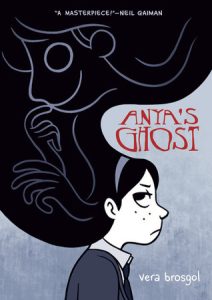
Vera Brosgol Anya’s Ghost; (2011) www.goodreads.com
2020s: Feminist, Intersectional, and Independent Voices
Today, horror comics are a thriving space for intersectional storytelling. Female characters are no longer bound by good/evil binaries. They are layered, traumatized, empowered, queer, and culturally diverse. More importantly, many of these stories are now written and illustrated by women and nonbinary creators. A form of, ‘the affected telling their stories.’

A. Rasen Melvina’s Therapy (2017) lennofspades.com

Ryoung Killstagram (2021) Webtoon
Platforms like Webtoon and Kickstarter have enabled the evolution of female roles through creator-owned horror comics that speak to modern anxieties. Works like Melvina’s Therapy by A. Rasen, Killstagram by Ryoung, blend horror with therapy and manipulation, and social media stalking. The line between creator and character is increasingly blurred, as horror becomes a tool of self-expression and catharsis.
In our supernatural horror comic, “Wake the dead” we’ve got our two female protagonists, Naomi & Nyah. Following true to the times, Naomi and Nyah are the subjects of their story, and active determinants of the flow of the story. They resurrect the dead to give grieved family members a chance to say their last goodbyes, all in a bid to find their own missing father; but this has angered powerful forces — spirit and human — who threaten their lives to stop what they do. Without giving away spoilers, their stand in the position of hero in the story is not yet cemented. They are dynamic characters for sure, and could blend well into the roles of anti-hero, victim, monster and I dare say, villain. Follow their story on Webtoon, Tapas and Spotify to discover and grow with our protagonists.
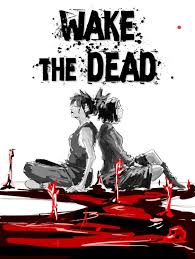
Wake The Dead Comic (2023)
Want More?
- Follow “Wake the Dead” on Webtoon, Tapas and Spotify.
- Check out indie publishers like ShortBox and Silver Sprocket
- Follow Webtoon and Tapas creators in the horror genre
- Explore anthologies like Twisted Romance and The Sleep of Reason
Conclusion: More Than Monsters
From victims to vamps to vivid storytellers, the adaptation of female roles in horror comics over the years have undergone a radical transformation. No longer confined to the margins, they now shape the very landscape of the genre. As horror continues to evolve, so too will the roles women play within it—on the page and behind the pen.
Further Reading:
- Hajdu, David. The Ten-Cent Plague: The Great Comic-Book Scare and How It Changed America
- Benton, Mike. Horror Comics: The Illustrated History
- Robinson, Lillian S. Wonder Women: Feminisms and Superheroes
- O’Day, Marc. “The Female Vampire and Horror Comics” in Journal of Graphic Novels and Comics
- Pumphrey, Kimberley. “Women in Modern Horror Comics.” Feminist Media Studies Journal
- Beaty, Bart. Comics Versus Art
Sources & References:
- David Hajdu, The Ten-Cent Plague
- Mike Benton, Horror Comics: The Illustrated History
- Comics Code Authority archives
- Vertigo and Warren Publishing catalogues
- Feminist Media Studies Journal, various issues
- Webtoon and Kickstarter creator pages
- Peyton Brunet and Blair Davis: The Women Who Built the Horror Genre Zocalo Public Square (2021)
Written by: Ofunne Egbunike
❤️❤️❤️ I never really throught deeply on this…this was insightful.
So glad you gleaned something useful from it. Thank you!
Very good
Awesome
Good